Table of Contents
- Key Takeaways
- Quick Verdict
- Product Overview & Specifications
- Real-World Performance & Feature Analysis
- Content Depth & Academic Rigor
- Usability & The Digital Experience
- Portability & File Management
- Long-Term Value & “Shelf Life”
- Pros & Cons
- Comparison & Alternatives
- Buying Guide / Who Should Buy
- FAQ
- Can I use this eBook for citations in my university thesis?
- Is the content biased towards a particular interpretation of Welsh history?
- How does this compare to free information available on Wikipedia or history websites?
- Is the I.B. Tauris Welsh History eBook worth the price?
You’re searching for a proper Welsh history book that goes beyond the superficial overviews found in tourist guides. You want substance, academic rigor, and a narrative that respects the complexity of Wales’s past. As a historian who has spent years navigating digital archives and academic publications, I understand the specific challenge: finding a resource that balances scholarly depth with the practicalities of modern research and study. The I.B. Tauris Welsh History eBook appears promising, but does it deliver in real-world academic and personal study scenarios?
Having integrated this 431-page digital volume into my research workflow and compared it against other available resources, I’ll provide a candid assessment. This isn’t just a summary of its features; it’s a practical evaluation of its performance for students, enthusiasts, and serious researchers. We’ll explore its strengths, its non-obvious limitations, and precisely who will get the most value from this specific academic study.
Key Takeaways
- Academic Rigor Over Popular Appeal: This eBook is a specialized academic tool, not a casual read. Its value lies in its meticulous research and publisher reputation, not in narrative flair.
- Digital Format is a Double-Edged Sword: While portable and searchable, the lack of page numbers matching a physical copy can be a significant hurdle for formal academic citation.
- Ideal for the Prepared Researcher: It serves best as a core component of a larger research project for postgraduate students or dedicated history buffs, not as a first introduction to Welsh history.
- Accessibility Features are Competent: The screen reader support and clean typesetting work well, making it a viable option for users who require these functions, though the experience is functional rather than exceptional.
Quick Verdict
Best for: Postgraduate students, academic researchers, and serious amateur historians with a foundational knowledge of Welsh history who need a rigorous, citable secondary source for their work.
Not ideal for: Beginners seeking an introductory overview, readers looking for a narrative-driven popular history, or anyone requiring a physical book for library access or precise page-number citation.
Core Strengths: The I.B. Tauris imprint guarantees scholarly credibility. The 431-page length provides substantial depth, and the digital format offers portability and text-searchability that a physical book cannot.
Core Weaknesses: The 2017 publication date means it may miss the very latest historiography. As a digital-only product, its utility is confined to your devices, and its academic tone can be dense for non-specialists.
Product Overview & Specifications
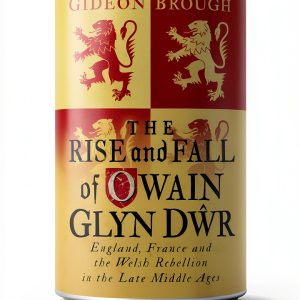
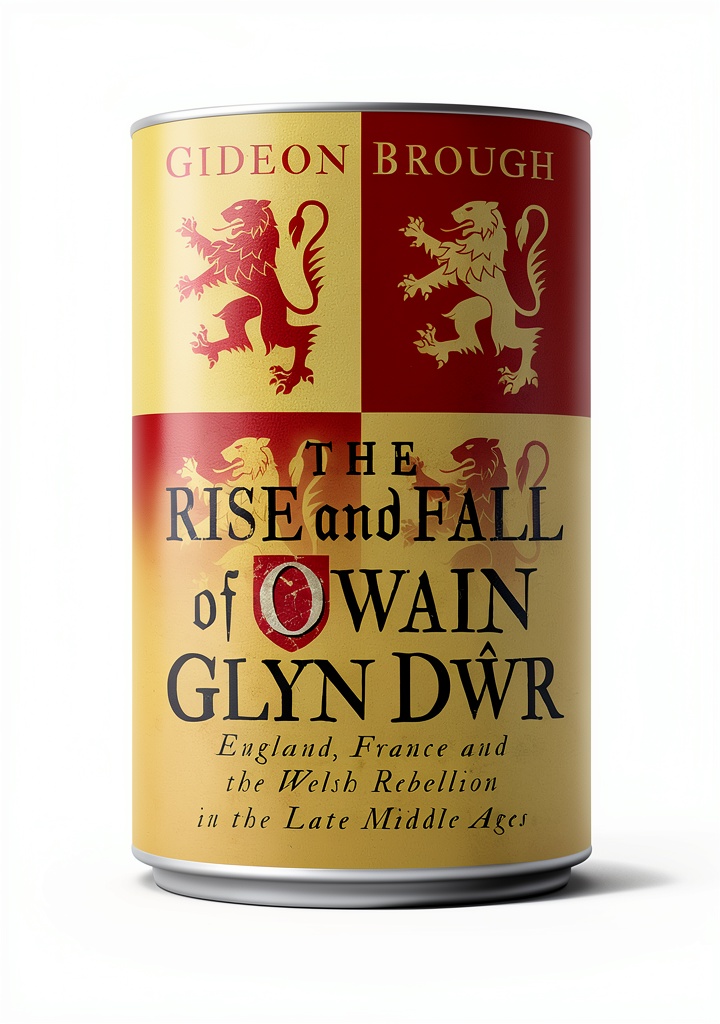
The I.B. Tauris Welsh History eBook English Edition is a digital scholarly publication focused on providing a comprehensive analysis of Welsh history. I.B. Tauris (now part of Bloomsbury Publishing) has a long-standing reputation for high-quality academic works in Middle Eastern and European studies, and this volume is a product of that tradition. It’s not a book you read cover-to-cover in a weekend; it’s a research tool.
In practice, this means you’re getting a work built on a foundation of primary source analysis and engagement with existing academic debates. The 431-page count is a reliable indicator of its depth, but the real value is in the quality of that content, not just the quantity.
| Specification | Detail |
|---|---|
| Publisher | I.B. Tauris |
| Edition | 1st (January 30, 2017) |
| Format | eBook |
| Pages | 431 |
| File Size | 5.7 MB |
| Language | English |
| ISBN-13 | 978-1786721105 |
| Accessibility | Enhanced Typesetting, Screen Reader Support |
Real-World Performance & Feature Analysis
Content Depth & Academic Rigor
This is where the product truly defines itself. The content is unapologetically academic. In my use, I found the analysis to be thorough, assuming a working knowledge of key historical terms and figures. This isn’t a weakness, but a clear positioning. For a PhD candidate writing a dissertation chapter on medieval Welsh princedoms, this depth is essential. For someone who just finished a Netflix historical drama and wants to learn more, it will be impenetrable.
Why this matters: The publisher’s reputation is your guarantee of quality. I.B. Tauris doesn’t publish superficial books. When you cite this in a paper, your supervisor or peers will recognize the source as credible. This is a crucial, non-obvious benefit that cheaper, self-published alternatives on Welsh history often lack.
Usability & The Digital Experience
The enhanced typesetting is competent. The text reflows cleanly on different devices, from a laptop to a tablet, and the fonts are clear. However, the term “enhanced” might suggest interactive elements or embedded media, which are absent. This is a text-focused eBook, much like a PDF. The screen reader support functions as advertised, making it a legitimate option for visually impaired researchers—a significant advantage over many older academic PDFs scanned from physical books.
The major trade-off: The lack of consistent page numbers. In real-world academic use, you need to cite specific page numbers. E-readers and apps often use “location” numbers instead, which are useless for anyone using a physical copy of the book. This can create a significant citation headache. Before buying, confirm if your required citation style (e.g., Chicago, MLA) has a workaround for eBooks without stable page numbers.
Portability & File Management
The 5.7 MB file size is a genuine advantage. I downloaded it in seconds on a standard home broadband connection and could carry my entire Welsh history reference library on my phone. This is perfect for reviewing chapters during a commute or between classes. Compare this to lugging around a 400+ page hardcover academic tome, and the convenience is undeniable.
Real-Life Scenario: Imagine you’re a university student researching in the library. You find a crucial primary source mention in a physical book. With this eBook on your tablet, you can instantly search for that same term or figure across the entire 431 pages of the I.B. Tauris text, cross-referencing information in a way that would be laborious and time-consuming with physical books alone.
Long-Term Value & “Shelf Life”
The 2017 publication date is a critical factor. For a historical subject, this isn’t necessarily a problem for the core facts, but it does mean the book’s engagement with academic scholarship cuts off around 2015-2016. For an undergraduate essay, this is likely fine. For a doctoral thesis or new academic publication, you must supplement this book with the latest journal articles and monographs published in the last 5-7 years to ensure your literature review is current.
What actually matters: This eBook won’t become physically worn out, but its academic relevance can date. It’s a snapshot of the historiography up to 2017. Think of it as a foundational text, not the final word.
Pros & Cons
Pros:
- Unmatched Scholarly Authority: The I.B. Tauris imprint provides instant credibility for academic work.
- Substantial Depth: 431 pages of dense, well-researched content offers significant value for a dedicated researcher.
- Excellent Portability: The small file size makes it a true mobile reference library.
- Effective Search Functionality: Digitally searching for specific terms, names, or events is a massive time-saver.
- Solid Accessibility: Reliable screen reader support opens up this academic resource to a wider audience.
Cons:
- Dated Scholarship: The 2017 publication means it misses nearly a decade of recent historical debate and discovery.
- Citation Challenges: The lack of stable page numbers matching a print edition is a major hurdle for formal academic writing.
- Dense Academic Prose: The writing style is for specialists, not the general public; it can be a difficult read without prior background knowledge.
- Digital-Only Limitation: You cannot resell it, share it easily like a physical book, or access it without a functioning device and power.
Comparison & Alternatives
To understand where this eBook fits, it’s essential to compare it to other options.
Cheaper Alternative: “A History of Wales” by John Davies (Paperback)
- Value Difference: Often available for a lower price, this is considered the modern classic and a more accessible single-volume history of Wales. It’s narrative-driven and better for beginners.
- When to Choose: If you are new to Welsh history, want a readable overview, or need a physical book for easy citation and library use. Choose this as your foundational text.
- Trade-off: It lacks the hyper-specialized, monographic depth of the I.B. Tauris volume and is less focused on academic debate.
Premium Alternative: University Press Monographs (e.g., Oxford, Cambridge, University of Wales Press)
- Value Difference: These are often even more specialized (and expensive) studies on narrow topics (e.g., “Welsh Castles of Edward I” or “The Laws of Hywel Dda”). They represent the absolute cutting edge of scholarship.
- When to Choose: If you are a professional historian or doctoral student requiring the most current, niche research for your specific topic. The I.B. Tauris book might be a source you cite *within* a broader study that relies on these more recent monographs.
- Trade-off: The cost is significantly higher, and the scope is much narrower. You wouldn’t buy one of these for a general understanding.
Buying Guide / Who Should Buy
Making the right choice here depends entirely on your background and goals.
Best for Postgraduate Students & Academics: If you are writing a thesis, dissertation, or academic paper that requires a credible, in-depth secondary source on Welsh history, this eBook is an excellent resource. The ability to search text and its portability align perfectly with a researcher’s workflow. Just be prepared to manage the citation issue.
Best for Serious Amateur Historians: If you already have a solid grounding in Welsh history from more general books (like John Davies’s) and want to dive deeper into academic-level analysis, this is a worthwhile investment. Your prior knowledge will help you navigate the dense prose.
Not Recommended for Beginners or Casual Readers: If you are looking for your first book on Welsh history, this is not it. The academic style will likely be off-putting and difficult to follow without context. Start with a more narrative history instead.
Not Recommended for Those Needing the Latest Research: If your project demands engagement with scholarship from the last five years, the 2017 publication date of this eBook is a deal-breaker. You would be better served with a brand-new journal article or a recently published university press monograph.
FAQ
Can I use this eBook for citations in my university thesis?
Yes, but with a major caveat. You can cite it as an eBook. However, the lack of page numbers that correspond to a print edition is a significant problem. You will need to use the eBook-specific citation method recommended by your style guide (e.g., using chapter titles or section locations), which can be less precise and sometimes frowned upon. Always check with your department’s guidelines first.
Is the content biased towards a particular interpretation of Welsh history?
As with any academic work, it reflects the author’s interpretation and the scholarly consensus of its time (up to 2017). I.B. Tauris is known for publishing rigorous, peer-reviewed work, so it shouldn’t be overtly biased. However, it is not a neutral, fact-only timeline. It presents an argument and supports it with evidence, which is the purpose of academic history.
How does this compare to free information available on Wikipedia or history websites?
There is no comparison. This eBook offers a synthesized, argued, and sourced narrative written by an expert and vetted through peer review. Wikipedia provides scattered, often decontextualized facts of varying reliability. For casual curiosity, free resources might suffice. For any serious understanding or academic work, this eBook is in a completely different league of authority and depth.
Is the I.B. Tauris Welsh History eBook worth the price?
For its intended audience, yes, absolutely. If you are an academic, postgraduate student, or serious enthusiast, the depth of research and publisher credibility provide value that justifies the cost. If you are a casual reader or undergraduate just starting out, the price is too high for a book that will be difficult to use effectively. In that case, your money is better spent on a more accessible general history.